Skip to content
ProvidersDesk
Guides

Billing, coding and credentialing, explained properly

The operational side of healthcare is badly served online. Clinical content is everywhere. Guidance on actually getting a claim paid is not. These are the articles we wanted and could not find.

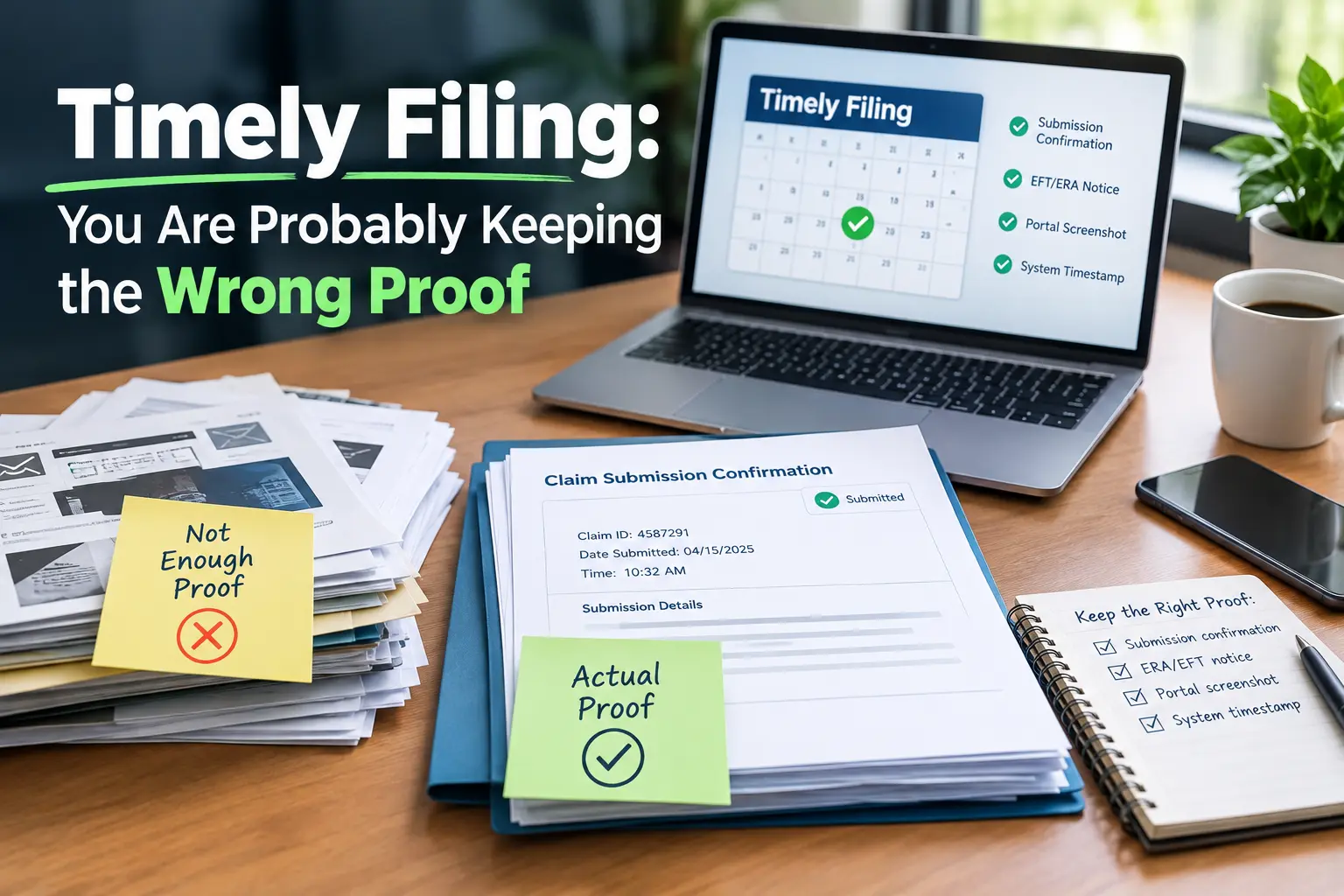
Timely filing medical billing infographic showing claim submission confirmation, filing dates, and the importance of keeping proper proof of timely claim submission.
Billing & Denials 6 min read

Timely Filing: You Are Probably Keeping the Wrong Proof

Most practices believe they can prove when a claim was filed. Then a CO-29 arrives, they pull the file, and the document they kept turns out to prove something else. A 999 acknowledgment confirms your clearinghouse received your file. Only a 277CA confirms the payer received your claim, and only the second one wins an appeal. Plus why a rejected claim never stopped the clock.
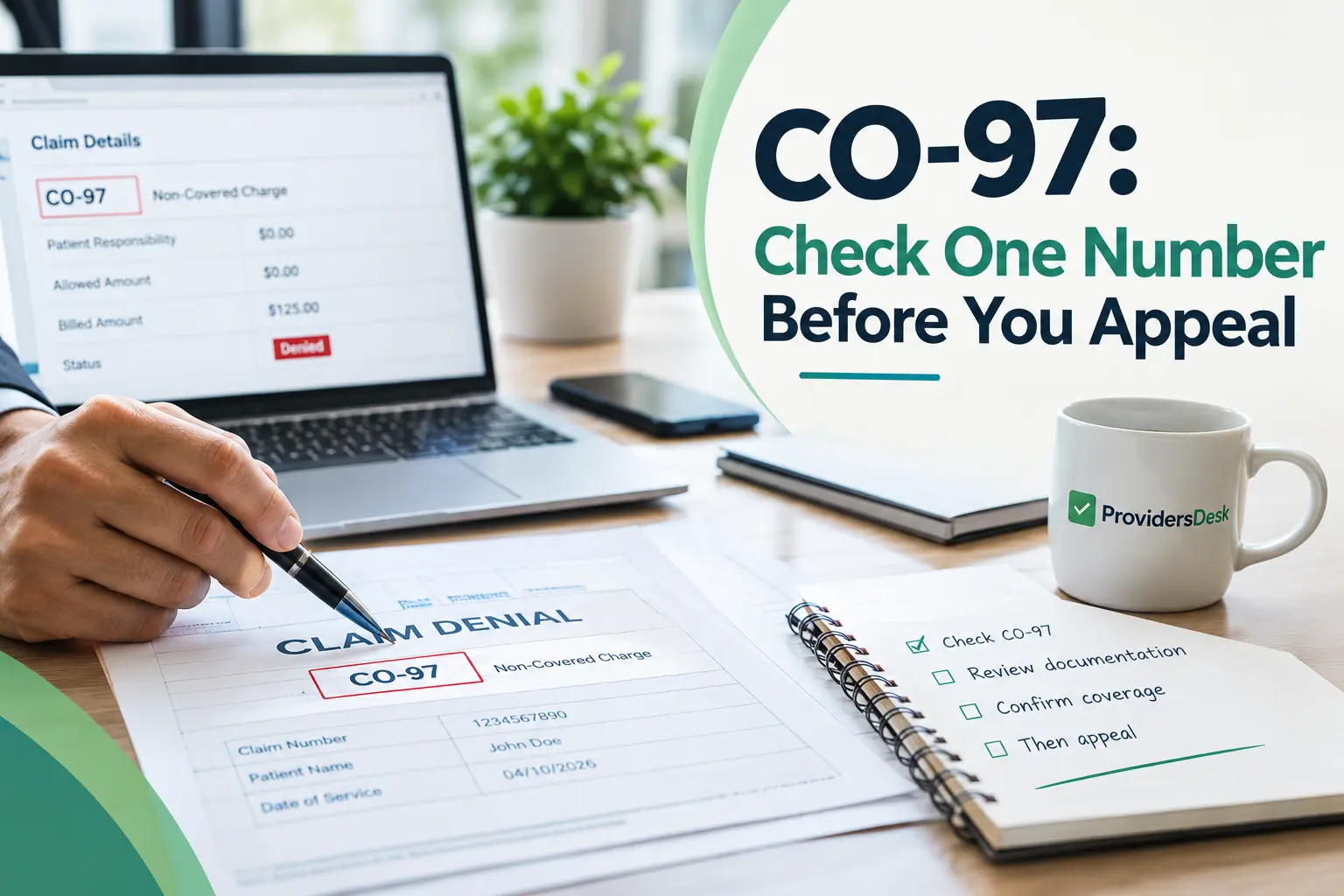

CO-97 medical billing infographic showing a denied claim, a highlighted CO-97 adjustment code, and a checklist to verify coverage and documentation before submitting an appeal.
Billing & Denials 6 min read

CO-97: Check One Number Before You Appeal

CO-97 means the payer decided one of your codes was already paid for inside another. Before writing an appeal, look up the modifier indicator on that code pair. If it is 0, no modifier and no documentation will ever unbundle it, and repeated override attempts are exactly the pattern audit selection looks for. Here is how to tell an appealable denial from a correct one in under a minute.

ProvidersDesk infographic explaining Days in AR, showing a 42-day accounts receivable metric, claim aging, payer mix, and why the average number can be misleading.
Practice Operations 6 min read

Days in AR: What Is Normal, and Why the Number Can Lie

Days in AR is the metric every practice tracks and the one most likely to give false comfort. It can improve while your collections get worse, because writing a claim off clears it from AR exactly as well as collecting it does. A healthy average can also sit on top of a serious aging problem. Here is the correct formula, what the benchmarks say, and the three ways the number misleads.

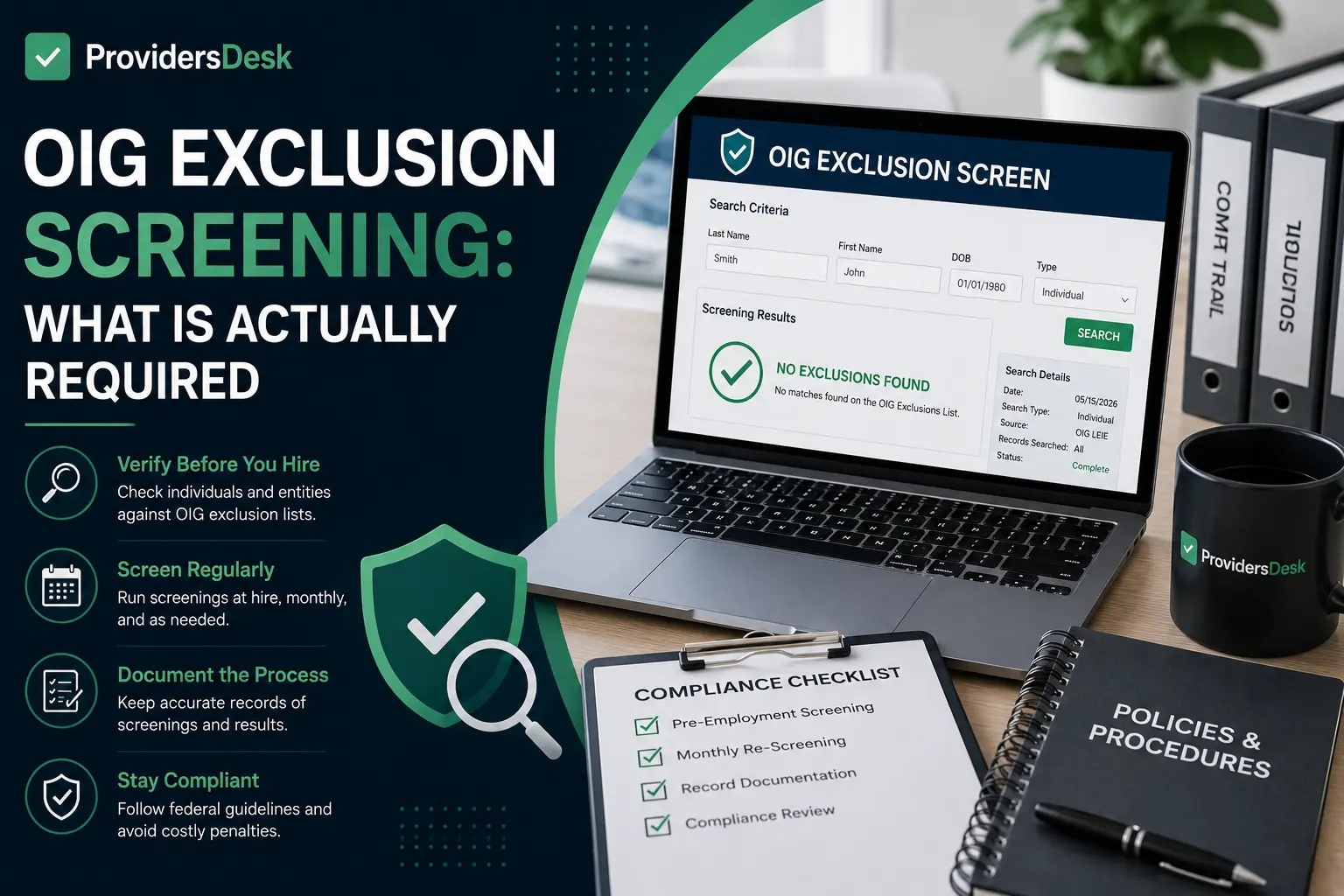
OIG exclusion screening compliance infographic showing pre-employment checks, regular screening, documentation, and an OIG exclusion search with no exclusions found.
Credentialing 7 min read

What OIG Exclusion Screening Actually Requires

You will read a lot of content telling you that monthly exclusion screening is federally required. That is not quite true, and the real answer is more useful. What is mandated, what OIG recommends, and what actually determines your exposure are three different things. Plus the three lists you need rather than one, and why the penalty figure in every article you read is already wrong.

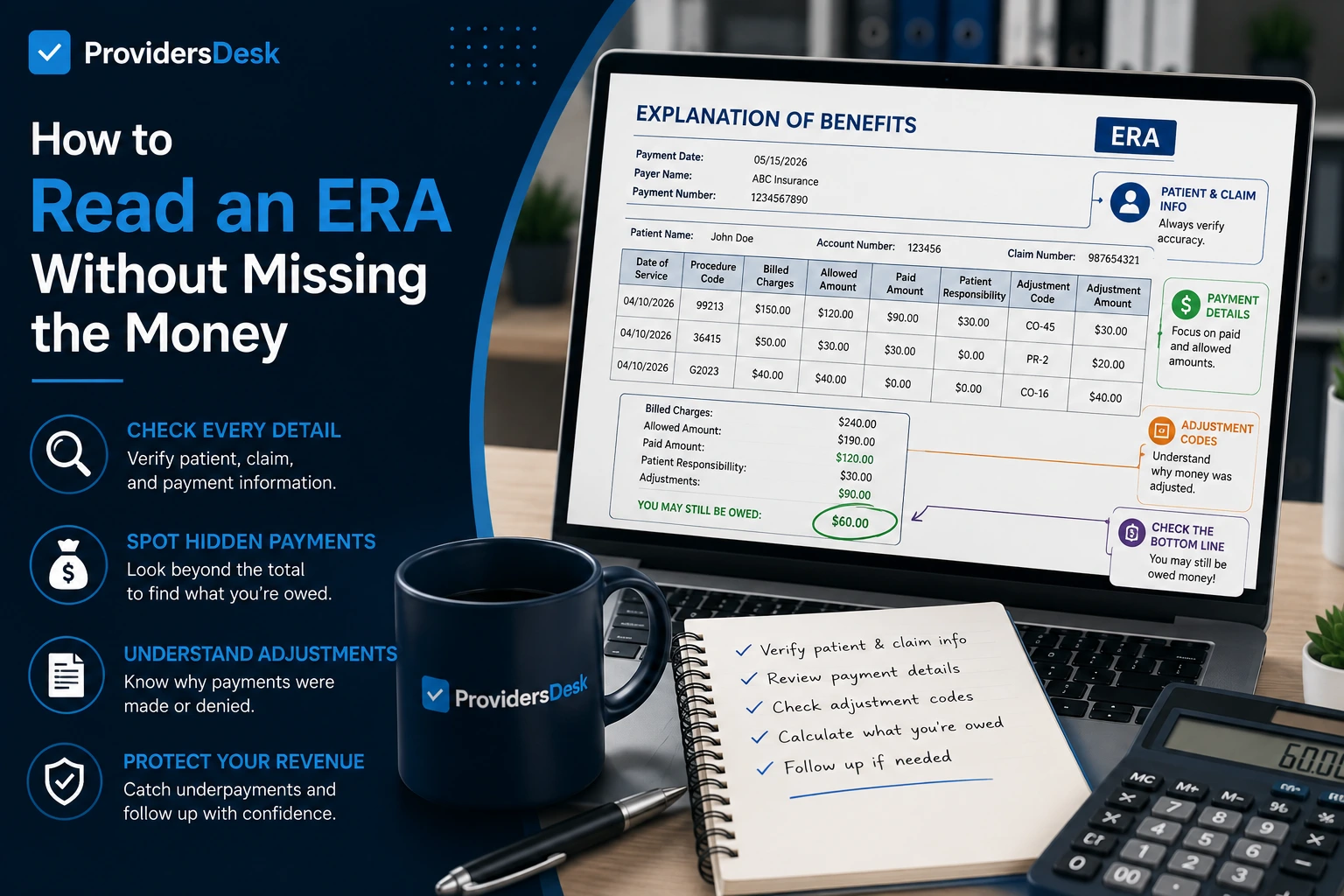
ProvidersDesk infographic showing how to read an ERA, including reviewing patient and claim details, payment amounts, adjustment codes, and identifying potential unpaid revenue.
Billing & Denials 7 min read

How to Read an ERA Without Missing the Money

Most billers read a remittance from the top down and post what they see. That works until the deposit does not match what the remittance said you were paid. When that happens the money is almost always in a segment near the bottom that nobody reads. Here is where provider level adjustments hide, why forward balances are so hard to trace, and a ten minute reconciliation that catches them.

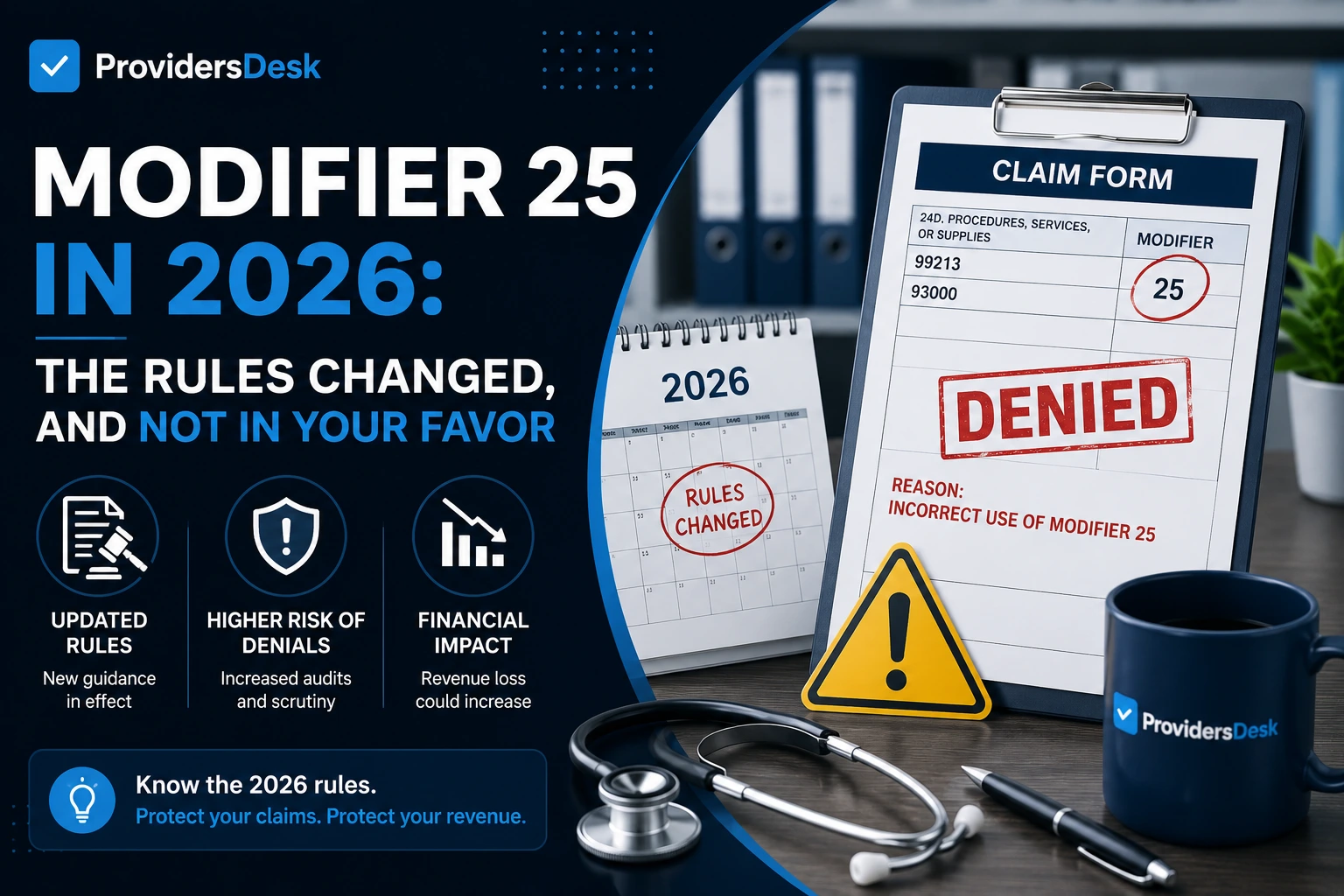
Modifier 25 in 2026 medical billing infographic showing updated rules, increased denial risk, and a claim form marked denied.
Coding 6 min read

Modifier 25 in 2026: The Rules Changed, and Not in Your Favor

Modifier 25 has always carried audit risk. Now it carries payment risk too. Several payers reduce the E/M reimbursement on modifier 25 claims automatically, regardless of how well documented they are, which is a different problem from a denial and needs a different response. Plus the same-diagnosis myth that costs practices money in both directions.

Credentialing 5 min read

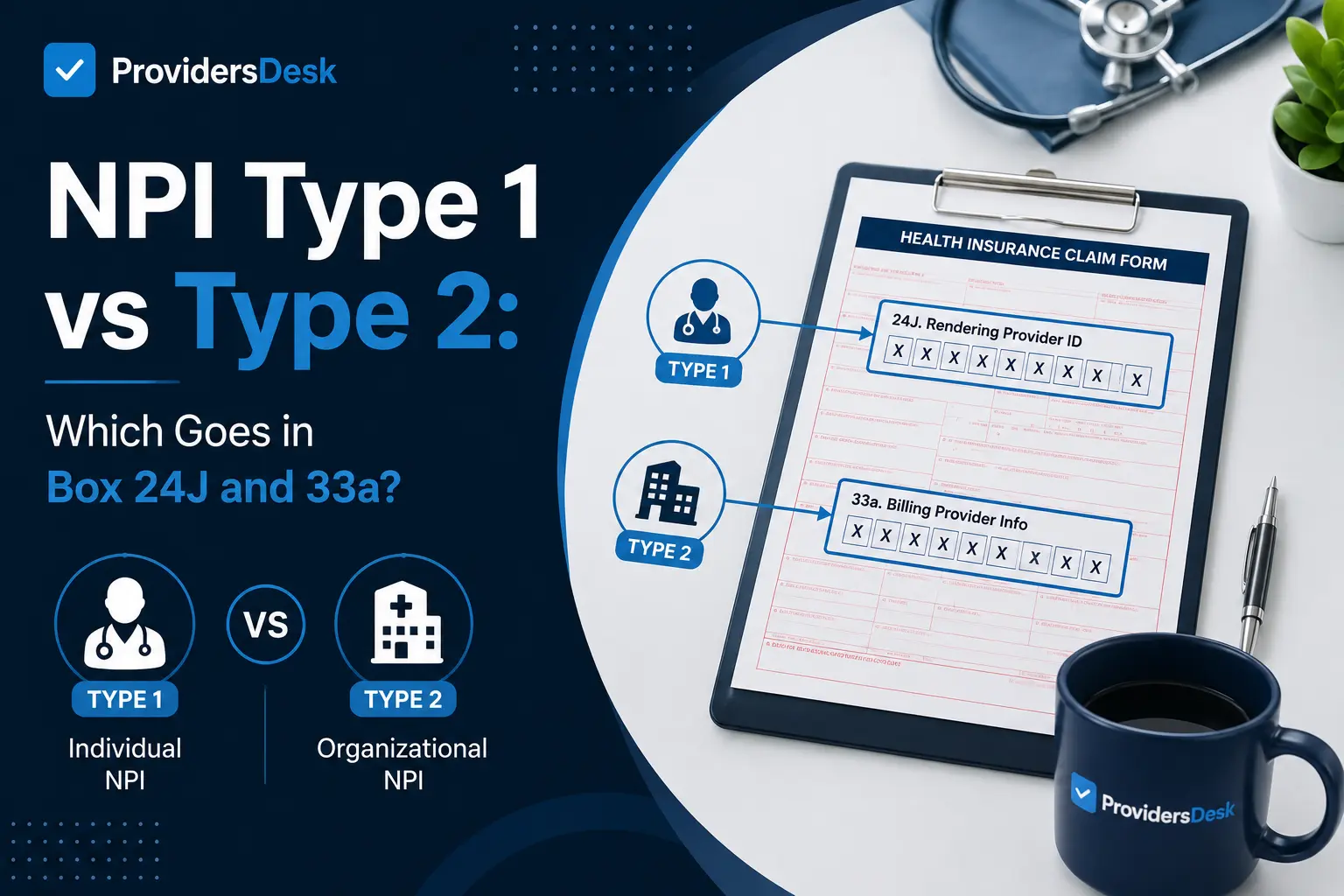
NPI Type 1 vs Type 2: Which Number Goes Where on a Claim

Type 1 belongs to a person, Type 2 belongs to a business. Easy enough until you hit the sole proprietor question, where being incorporated changes which number goes in Box 33a. Box 24J is always the individual, and Medicare will reject a group NPI there. Here is where each number belongs, on paper and in the 837P, and the rejections you get when it is wrong.

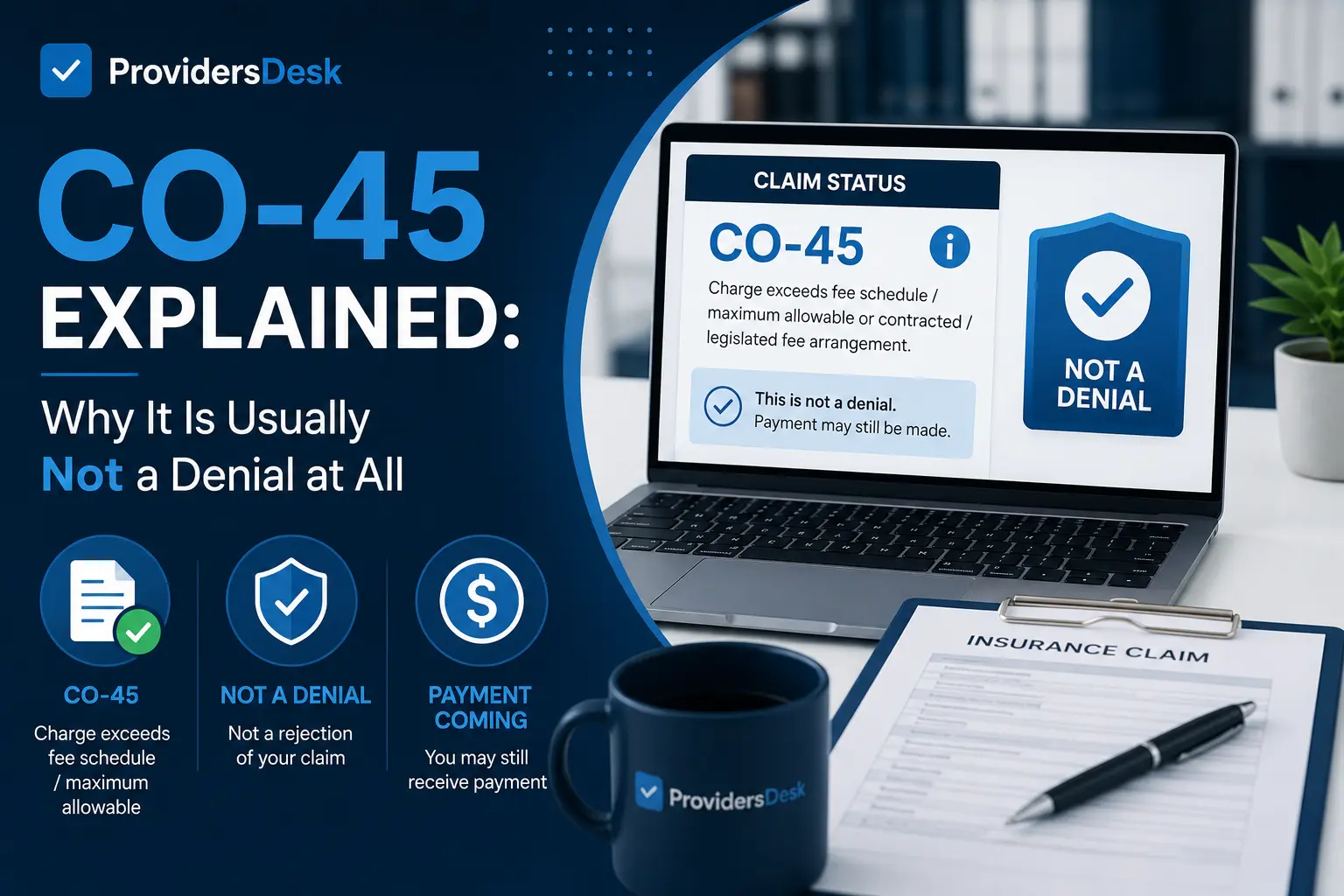
CO-45 explained: medical billing claim adjustment code showing why it is usually not a denial and may still result in payment.
Billing & Denials 4 min read

CO-45 Explained: Why It Is Usually Not a Denial at All

CO-45 means your billed charge exceeded the allowed amount, and the difference is a contractual write-off. It is almost never an error and rarely worth appealing. What matters is what you do with the difference, because billing the patient for it is balance billing. Here is how to tell a normal write-off from a genuine underpayment.

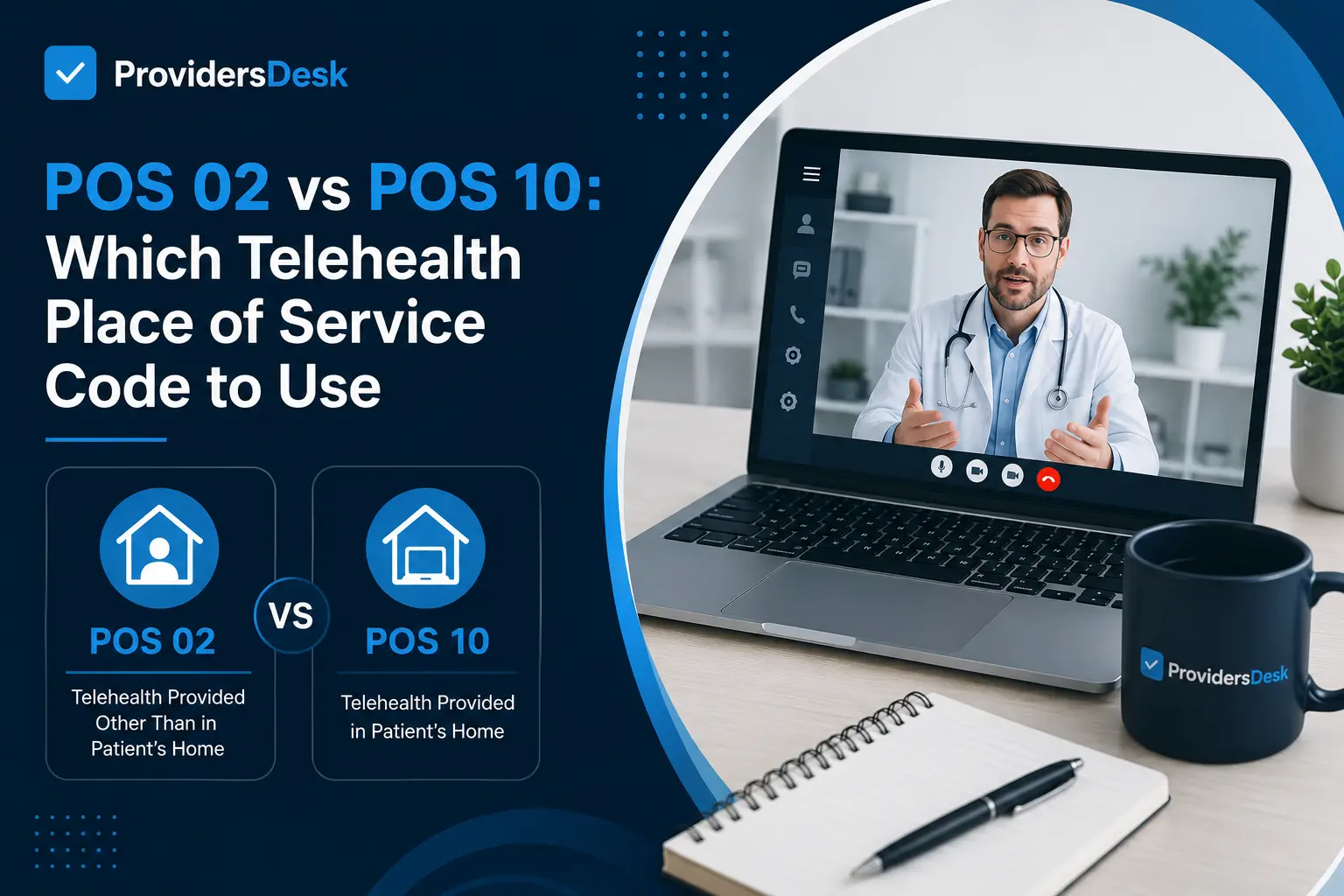
POS 02 vs POS 10 telehealth place of service codes comparison graphic for healthcare providers.
Coding 5 min read

POS 02 vs POS 10: Which Telehealth Place of Service Code to Use

Medicare wants POS 02 or 10 and no modifier. Most commercial payers want POS 11 with modifier 95. Getting the two confused is one of the most common telehealth denials, and the wrong POS also costs you money. Here is how to decide, and what to verify with your own payers.